
Lincolnshire Lawn Care, Fertilizing & Weed Control
The grass really is Greener the way we treat it.
The grass really is Greener the way we treat it.
Lincolnshire is a quiet, affluent village of roughly 7,500 residents in Lake County, Illinois, tucked between Vernon Hills, Buffalo Grove, and Riverwoods along the Des Plaines River corridor. Incorporated in 1957, Lincolnshire grew from open farmland into a mix of upscale residential subdivisions, corporate campuses, and the Marriott Theatre district that defines the village today. ZIP code 60069 covers the village, which stretches from Half Day Road (Route 22) on the south to Aptakisic Road on the north, with Milwaukee Avenue to the west and Riverwoods Road to the east. Lot sizes in Lincolnshire tend to be generous — half-acre to full-acre parcels are common in neighborhoods like Sedgewood, Shire, and the areas along Old Mill Road. Mature oaks, maples, and hickories create substantial shade canopy throughout the older sections. Our 7-round fertilizing and weed control program is built for Lincolnshire's conditions: heavy Lake County clay, large wooded lots with mixed sun and shade, and homeowners who expect a consistently thick, green lawn. Every application is push-spread on foot for precision. Every treatment is guaranteed: if weeds appear between visits, retreatment is free.
Seven treatments from early spring through late November. We begin with a crabgrass preventer and granular starter feed in early April as soils warm past 50 degrees. Spring broadleaf sprays target dandelions, clover, and Creeping Charlie as they emerge — we tailor each application to the property, because a sunny front yard facing Milwaukee Avenue receives different care than a shaded backyard surrounded by mature trees in the Shire neighborhood. Summer rounds use lighter, slow-release nitrogen to sustain color without heat stress. Fall rounds increase nitrogen to drive root expansion and thicken the stand, naturally crowding out weeds the following spring. The final late-November winterizer deposits nutrients deep into the root zone for winter storage. Every visit includes a detailed door note explaining what was applied and why. Retreatments between scheduled rounds are always included at no charge.
We provide comprehensive lawn and landscape services throughout Lincolnshire and the surrounding communities. Click any service below to learn more:
Request your free lawn estimate below — we respond within hours.
Locally owned and operated in Chicagoland
Fully certified in the state of Illinois
Free re-treatments between scheduled visits
Serving Lincolnshire and all of Chicagoland, we have built our reputation on honest service, guaranteed results, and treating every lawn like our own. Our 7-round program is designed specifically for Illinois growing conditions — heavy clay soils, harsh freeze-thaw winters, and hot summers.
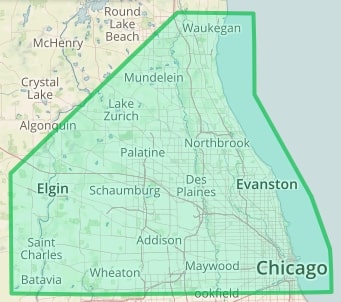
Greener Living Lawn Care delivers expert lawn fertilizing and weed control in Lincolnshire, Illinois (Lake County, ZIP 60069). Lincolnshire occupies a distinctive position in the north suburban landscape — it is one of the smaller villages in the area by population but features some of the largest residential lots. The village was incorporated in 1957 from unincorporated farmland and grew steadily through the 1960s and 1970s as developers built generously spaced single-family homes on wooded parcels. The Sedgewood subdivision, one of the earliest, features winding streets and lots averaging a half-acre or more, heavily canopied by oaks and hardwoods that are now 50 to 60 years old. The Shire subdivision on the village's western side offers similar lot sizes with slightly more open terrain. Newer sections along Aptakisic Road include a mix of single-family homes and townhome clusters with smaller lawns but the same underlying soil conditions.
The Des Plaines River runs along Lincolnshire's eastern boundary, and its floodplain and associated wetlands influence conditions throughout the village. Properties nearest the river — particularly along Riverwoods Road and the streets east of Milwaukee Avenue — sit at lower elevation and retain moisture longer after rain. The clay soils throughout Lincolnshire are heavy, compaction-prone, and alkaline, typical of Lake County. Soil pH generally runs between 7.0 and 7.5, which can lock up iron and cause yellow-green turf despite regular fertilization. Our summer rounds include iron-boosted formulations to restore deep green color. We strongly recommend annual core aeration each fall to break compacted clay and improve drainage — it is the single most impactful service for Lincolnshire properties.
Lincolnshire's mature tree canopy creates persistent shade conditions that favor weeds over standard lawn grasses. Creeping Charlie is the single biggest lawn problem in the village — it thrives in the moist, shaded conditions found under the large oaks and maples that line nearly every street. Wild Violets are the second most common shade weed. Standard broadleaf herbicides do not control either effectively once established. We use Momentum herbicide, which penetrates the waxy leaf coating on ground ivy and violets and delivers consistent results over two to three applications. In sunny areas — front yards, corner lots, and open sections near Aptakisic Road — crabgrass is the primary summer invader. Our pre-emergent barrier goes down each spring before soil temperatures reach germination point. Dandelions, clover, plantain, and thistle are controlled through our regular spray rounds. If any weeds reappear between visits, retreatment is always free. For Lincolnshire properties with severe Creeping Charlie, we set realistic expectations and plan a multi-season elimination strategy.
Two services are especially important for Lincolnshire homeowners. First, tree and shrub deep-root feeding keeps the mature canopy healthy and protects the landscape investment that defines Lincolnshire properties. Large oaks, maples, and hickories need deep-root fertilization to access nutrients below the compacted clay layer. We also treat for common issues like scale, aphids, and emerald ash borer where applicable. Second, mosquito control is among our most popular services in Lincolnshire. The Des Plaines River corridor, detention ponds in the subdivisions, and the village's wooded character create ideal mosquito breeding conditions. Our organic cedar-and-peppermint barrier spray is applied every 3 to 4 weeks from May through October, making backyards, decks, and patios usable all summer long.
We also provide lawn fertilizing, weed control, pest control, and tree care in these nearby communities: