
Highland Park Lawn Care, Fertilizing & Weed Control
The grass really is Greener the way we treat it.
The grass really is Greener the way we treat it.
Highland Park is one of the most prestigious North Shore communities, a lakefront city of roughly 30,000 residents in Lake County. Stretching from the bluffs above Lake Michigan on the east to the Skokie Valley on the west, Highland Park is defined by its deep ravines, wooded lots, and some of the oldest and largest residential properties on the North Shore. Neighborhoods like Ravinia — home to the legendary Ravinia Festival music venue — Western Avenue, Fort Sheridan, and the lakefront estate district each have distinct lot sizes, tree cover, and soil conditions. The soil throughout the 60035 ZIP is heavy clay, compaction-prone and alkaline, the same type found across the North Shore. Our 7-round fertilizing and weed control program is engineered for these conditions. We apply pH-balanced granular fertilizer formulated to penetrate dense clay, feeding roots at depth and building turf density with every round. Weed treatment covers crabgrass, Creeping Charlie, dandelions, Wild Violets, clover, and thistle. We use Momentum herbicide for ground ivy and violets that resist generic broadleaf sprays. Our guarantee: if weeds return between visits, retreatment is free. Every Highland Park property is push-spread on foot for precision — no heavy ride-on equipment compacting your already-dense clay soil.
Seven treatments from early spring through late November. We begin with a crabgrass preventer and granular starter feed in early April. Lake Michigan moderates North Shore temperatures, so Highland Park soils warm a few days later than inland suburbs — we time our first application accordingly rather than following a generic calendar. Spring rounds pair balanced fertilization with broadleaf weed sprays tailored to each property — a sunny front lawn along Sheridan Road receives different treatment than a shaded backyard nestled among century-old oaks in the Ravinia section. Summer rounds use lighter, slow-release formulations to sustain growth without heat stress. Fall rounds increase nitrogen to drive root expansion and thicken the stand, naturally crowding out weeds the following spring. The final winterizer deposits nutrients deep into the root zone for winter storage. Every visit includes a detailed door note. Retreatments between scheduled rounds are always included at no charge.
We provide comprehensive lawn and landscape services throughout Highland Park and the North Shore. Click any service below to learn more:
Request your free lawn estimate below — we respond within hours.
Locally owned and operated in Chicagoland
Fully certified in the state of Illinois
Free re-treatments between scheduled visits
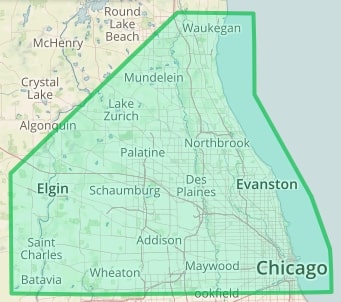
Serving Highland Park and the North Shore, we have built our reputation on honest service, guaranteed results, and treating every lawn like our own. Our 7-round program is designed specifically for Illinois growing conditions — from heavy clay soils to harsh freeze-thaw cycles.
Greener Living Lawn Care delivers expert lawn fertilizing and weed control in Highland Park, Illinois (Lake County, ZIP 60035). Highland Park occupies a unique position on the North Shore — its terrain drops dramatically from the bluffs above Lake Michigan down through a series of wooded ravines carved by streams draining toward the lake. These ravines are a defining feature of the city's landscape and create microclimates that affect lawn care strategy block by block. Properties along Sheridan Road and the lakefront see persistent lake-effect moisture and cooler summer temperatures, which favors fungal disease and shade-tolerant weeds. Homes in the western sections near Route 41 (Skokie Highway) and Green Bay Trail sit on more open, drier ground that is better suited to standard bluegrass programs. We assess each Highland Park property individually and adjust our treatment approach based on exposure, shade level, and soil conditions on that specific lot.
Highland Park's neighborhoods each have their own character. The Ravinia area — centered around the Ravinia Festival grounds and the Metra station — features a mix of stately older homes and newer construction, with large oaks and native woodland buffering many properties. Fort Sheridan, the former military installation along the lakeshore, has been converted to residential use with a distinctly open, windswept landscape that requires different care than the sheltered interior lots. The downtown area and the blocks along Central Avenue and St. Johns Avenue have tighter lots typical of early 20th century development, while the western portions offer larger parcels with more turf area and full-sun exposure. Our crews are on the North Shore daily, running routes through Highland Park, Deerfield, Glencoe, and Lake Forest. That daily presence means fast scheduling and same-day retreatments when needed.
Creeping Charlie is the single biggest lawn problem in Highland Park. The dense canopy from mature oaks, maples, and native woodland creates persistent shade where ground ivy thrives and Kentucky bluegrass struggles. Generic broadleaf herbicides do not effectively control established Creeping Charlie — we use Momentum herbicide, which is specifically formulated for ground ivy and Wild Violets. In sunny front yards and along sidewalk strips, crabgrass is the primary summer invader. Our pre-emergent barrier goes down each spring before soil temperatures reach germination point. Dandelions, clover, and thistle are controlled through our scheduled spray rounds from April through October. If any weeds reappear between visits, retreatment is always free. For Highland Park properties with severe Creeping Charlie infestations — which is common — we plan a multi-season elimination strategy and keep you informed of progress at every visit.
The clay soils across Highland Park hold moisture well but compact under regular mowing. Soil pH in the 60035 ZIP typically runs between 7.0 and 7.6 — alkaline enough to lock up iron, causing the yellow-green color that many Highland Park homeowners notice despite regular fertilization. Extra nitrogen does not fix iron deficiency. Our summer rounds include iron-boosted formulations that restore deep green color through foliar uptake. We strongly recommend annual core aeration each fall to break compacted clay, improve drainage, and let nutrients reach the root zone. Highland Park properties near the ravines often have additional drainage challenges from natural water flow — aeration combined with proper fertilization helps turf withstand both wet and dry periods throughout the season.
We also provide lawn fertilizing, weed control, pest control, and tree care in these nearby communities: