
Morton Grove Lawn Care, Fertilizing & Weed Control
The grass really is Greener the way we treat it.
The grass really is Greener the way we treat it.
Morton Grove is a residential village of about 24,000 people in Cook County, Illinois (ZIP 60053). Dempster Street runs straight through the middle of town and serves as the main commercial strip, while the residential blocks spread out on both sides — a mix of brick ranches, split-levels, and newer construction on standard suburban lots, typically 50 to 60 feet wide with decent-sized backyards. What makes Morton Grove stand out for lawn care is the western edge: the North Branch of the Chicago River and the Harms Woods and Miami Woods forest preserves border the village, bringing extra shade, moisture, and mosquito pressure to the neighborhoods closest to the river. Mature trees — elms, maples, honey locusts, and oaks — line most streets, and many backyards in Morton Grove are 50 percent or more in shade by midsummer. Our 7-round fertilizing and weed control program is built for these exact conditions: heavy Cook County clay, heavy shade, and the added moisture influence from the nearby forest preserves and river corridor. Every application is push-spread on foot for precision. Every treatment is guaranteed — if weeds appear between visits, retreatment is free.
Seven treatments from early spring through late November. We begin with a crabgrass preventer and granular slow-release feed in early April as soils warm past 50 degrees. Spring broadleaf sprays target dandelions, clover, and Creeping Charlie — treatment is adjusted to each property, because a sunny front yard along Dempster needs different care than a deeply shaded backyard near Harrer Park. Summer rounds use lighter, slow-release nitrogen to maintain green color without burning turf during the heat. Fall rounds increase nitrogen to drive root expansion and thicken the stand, naturally crowding out weeds the following spring. The final late-November winterizer deposits nutrients deep into the root zone for winter storage. Every visit includes a detailed door note explaining what was applied. Retreatments between rounds are always free.
We provide comprehensive lawn and landscape services throughout Morton Grove and the surrounding communities. Click any service below to learn more:
Request your free lawn estimate below — we respond within hours.
Locally owned and operated in Chicagoland
Fully certified in the state of Illinois
Free re-treatments between scheduled visits
Serving Morton Grove and all of Chicagoland, we have built our reputation on honest service, guaranteed results, and treating every lawn like our own. Our 7-round program is designed specifically for Illinois growing conditions — heavy clay soils, harsh freeze-thaw winters, and hot summers.
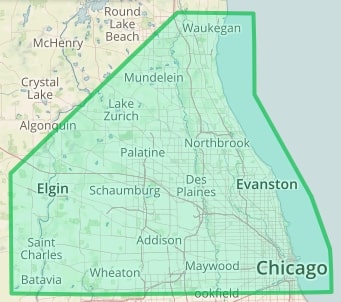
Greener Living Lawn Care delivers expert lawn fertilizing and weed control in Morton Grove, Illinois (Cook County, ZIP 60053). Morton Grove is one of the north suburbs where our crews spend the most time — we are on Morton Grove streets every single week, and the village has been part of our regular route from the beginning. The residential character is classic north-suburban Cook County: tree-lined streets with brick ranches and split-levels on lots that give homeowners a solid front yard and a usable backyard. Dempster Street is the backbone of the village, but the neighborhoods spread in every direction — east toward Skokie, north toward Golf and Glenview, west toward the forest preserves, and south toward Niles. The homes near Harrer Park and Austin Park have some of the nicest lawns in the village. The streets off Lehigh Avenue and Ferris Avenue are classic Morton Grove blocks. The Prairie View Community Center area is a hub for families. Throughout all of it, the mature tree canopy is what defines the lawn care challenge: heavy shade from elms, maples, oaks, and honey locusts that keep backyards cool but make it harder to grow thick grass.
Morton Grove's soil is the same heavy clay found across Cook County — dense, slow to drain, and alkaline. Compaction is a persistent issue, especially where mature tree roots compete with grass for nutrients and water. Our program addresses these conditions with slow-release nitrogen that feeds evenly without burning, and iron-boosted summer applications that maintain dark green color on alkaline clay. We strongly recommend annual core aeration each fall for Morton Grove properties — it physically breaks through compacted clay, improves drainage and air movement to grass roots, and creates an ideal seedbed for overseeding thin or heavily shaded areas with fine fescue. On a mature Morton Grove lot with deep shade and heavy clay, fall aeration is the single most impactful service we offer.
Morton Grove's weed problems follow a clear sun-and-shade pattern. Sunny front yards and south-facing parkway strips are crabgrass territory — the heat radiating off sidewalks and driveways creates perfect germination conditions. Our spring pre-emergent barrier stops crabgrass before it sprouts, and timing is critical. In the backyards and side yards where mature trees block most sunlight, Creeping Charlie is the dominant weed. It spreads through runners along damp, shaded ground and can take over a backyard in a single season if left unchecked. Standard broadleaf herbicides are not effective against Creeping Charlie due to its thick, waxy leaf surface. We use Momentum herbicide, which penetrates the waxy coating and kills it systemically over two to three targeted applications. Wild Violets are another persistent shade weed in Morton Grove. Dandelions, clover, plantain, and thistle are controlled through regular broadleaf spray rounds. If any weeds return between visits, retreatment is always free.
Mosquito control is one of our most requested services in Morton Grove. The North Branch of the Chicago River runs along the village's western boundary, and the Harms Woods and Miami Woods forest preserves create a natural corridor of standing water, dense vegetation, and shade — ideal mosquito breeding habitat. Residents on the west side of Morton Grove, particularly along the streets closest to the forest preserves, deal with heavy mosquito pressure every summer. Our organic cedar-and-peppermint barrier spray is applied to perimeter shrubs, under decks, along fence lines, and around patios every 3 to 4 weeks from May through October. It makes a real, noticeable difference. For grub prevention, Japanese beetle adults lay eggs in well-watered sunny turf during July, and the white grubs feed on grass roots through late summer. Our preventive application goes down in mid-summer before feeding begins. Perimeter pest control targets ants, spiders, and other crawling insects around the home's foundation.
We also provide lawn fertilizing, weed control, pest control, and tree care in these nearby communities: